
Engineered Performance
One Panel. Four Jobs.
CFG’s structural composite board is engineered to perform the work of multiple conventional building products simultaneously. Rather than adding layers to overcome the limitations of wood, CFG starts with an entirely different material—recycled PET—and integrates structural strength, moisture resistance, thermal performance, and other functional characteristics directly into a single continuously co-extruded panel.
Every material CFG eliminates is one less product to order, transport, unload, carry, cut, install, and inspect. Simpler wall systems mean fewer installation steps, fewer opportunities for error, and lower labor costs.
Platform Capabilities
Engineered for Regional Performance — Formulations, skins, reinforcement layers, and core structures can be tailored for specific climates, building codes, and end-use applications without changing the underlying manufacturing platform.
Structural Grade Performance — Engineered to match the structural shear performance of conventional CDX plywood in a lighter, moisture-inert composite panel.
Continuous Insulation (R-5 per inch) — Thermal insulation is integrated directly into the foamed rPET core, eliminating separate foam board while minimizing thermal bridging.
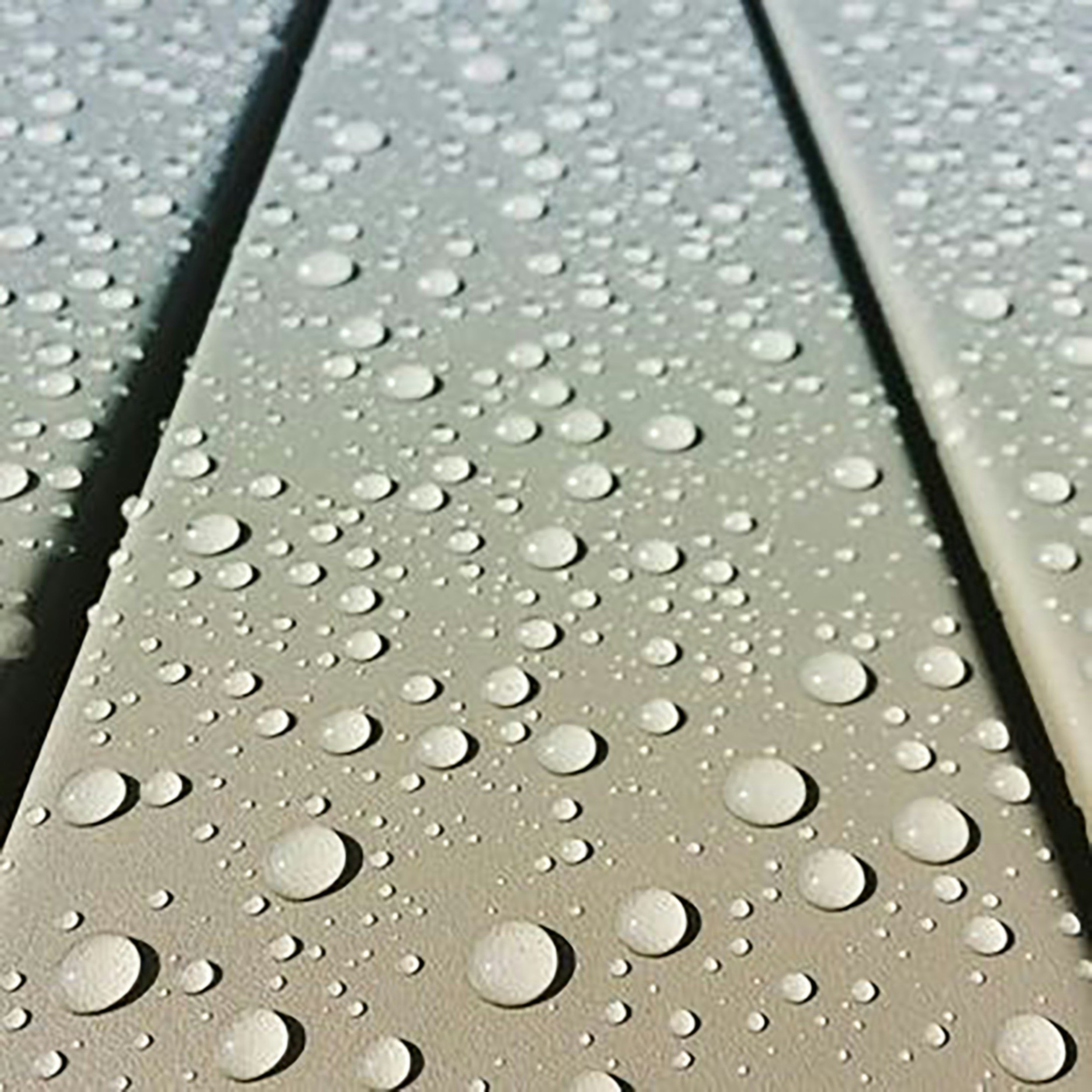
Integrated Weather Resistive Barrier — The moisture-resistant rPET composite is designed to eliminate the need for separate housewrap or secondary weather-resistive membranes.
Standard Fastener Compatibility — High-density structural skins are engineered to provide secure fastening with conventional pneumatic nails and construction screws.
Mold and Rot Resistant — Unlike wood fiber, rPET does not absorb moisture, support biological growth, or degrade over time in high-humidity or high-rainfall environments.
Lightweight — CFG's cellular foam core structure reduces panel weight relative to conventional OSB and plywood, lowering handling requirements, transportation costs, and fatigue on job sites and in factory panel operations.
Fire Resistance — Non-halogenated flame-retardant additives can be incorporated directly into the outer laminate during manufacturing to meet fire-rated assemblies and wildfire-zone building requirements.
Impact and Ballistic Resistance — Reinforcement layers and composite skin structures can be engineered for security, critical infrastructure, and other specialized applications.
What sets CFG apart is not simply the performance of a single panel, but the flexibility of the manufacturing platform itself. The same co-extrusion line can be reconfigured by adjusting core density, skin formulations, reinforcement layers, and additives to produce panels optimized for entirely different climates, building codes, and end-use applications—without new tooling or a separate manufacturing footprint. A panel engineered for coastal Florida should not be built the same way as one destined for wildfire-prone California, factory-built wall systems, or specialized government infrastructure. Instead of asking one material to serve every purpose, CFG engineers the material itself to meet the application.
Development Status
CFG’s rPET structural panel platform is currently in the bench-validation and commercial line commissioning phase. Performance characteristics described on this page reflect design objectives, engineering analyses, and bench-scale results. Third-party structural, fire, and durability testing is planned as part of the company’s 18-month commercialization program.